The sight-reading difficulty progression I built (and why order matters more than content)
April 19, 2026
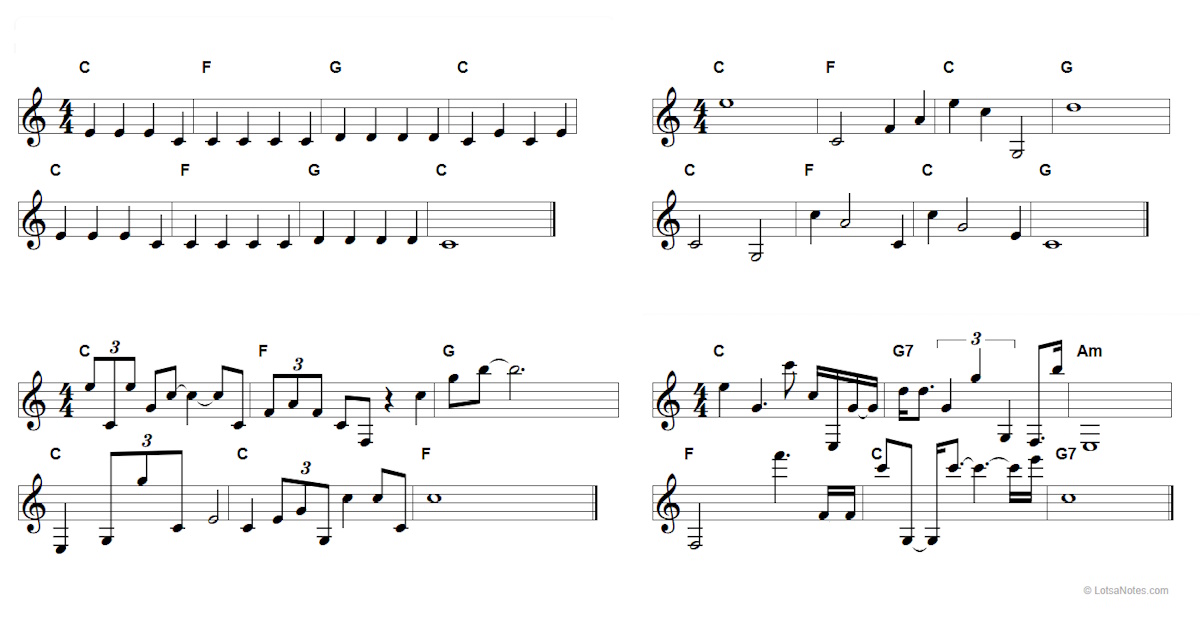
I’ve been working on sight-reading pedagogy for a while, and the biggest thing I’ve learned is that the order of introduction matters much more than the content itself. Most method books cover roughly the same material. What separates the ones that work from the ones that don’t is the sequence.
Here’s the 21-level progression I landed on, along with the reasoning behind the parts that surprised me.
The progression
- Quarter notes, 3-note range
- Quarter notes, 5-note range
- Quarter notes, octave range
- Quarter rests
- Half notes
- Half rests
- Whole notes
- Paired eighth notes
- Syncopated eighths
- Eighth rests
- One ledger line
- Ties
- Dotted quarters
- Eighth-note triplets
- Simple 16th patterns
- 16ths mixed with 8ths
- Two ledger lines
- 16th rests
- Quarter-note triplets
- Three ledger lines
- All features including first-beat rests
Four things in here run against the conventional wisdom, and each one cost me real time to figure out.
Rests are harder than the notes they replace
A quarter rest at level 4 trips students more than the paired eighths at level 8. This surprised me the first time I saw it, and then kept being true.
The intuition I’ve settled on: reading a note is a single event. Reading a rest is two events, because you have to register that something is missing and keep counting through the silence. Empty space reads differently than sound, and the reader has to do more work, not less.
That’s why rests get introduced one duration at a time in this progression, each as its own level, rather than being folded in with the notes of the same value.
Ledger lines belong late, not early
Most method books throw a ledger-line C at students in week two. I think that’s wrong. It combines “new symbol” with “off-staff spatial reasoning,” and the two interfere with each other. Students who are still building the core staff map get handed a second problem before the first one is automatic.
Isolating rhythm development through level 10, then introducing one ledger line at level 11, produced cleaner progress in my own practice and with the students I’ve worked with. Two and three ledger lines come later still, at 17 and 20, once there’s something stable to extend from.
First-beat rests belong at the very end
They sound simple. “Just don’t play the 1.” But they destroy the reader’s downbeat anchor, and everything downstream of that anchor gets shakier.
A sight-reader leans on the first beat of each bar the way a walker leans on the first step of a staircase. Remove it and the reader is counting from a phantom reference point for the rest of the bar. This is why level 21 is specifically “all features plus first-beat rests” rather than slotting first-beat rests in alongside the other rest types earlier. They’re a capstone skill, not a rhythm variant.
Quarter-note triplets are harder than eighth-note triplets
Also counterintuitive, also consistent.
Eighth triplets live inside a single beat. You can feel them as a gesture, almost as a single thing with three pulses in it. Quarter triplets span two beats and require the reader to subdivide against an abstract grid that isn’t anchored to any physical pulse they can feel. That’s a different cognitive task, and it belongs later — level 19, two full levels after eighth triplets.
Why this matters for practice design
If you’re designing sight-reading practice for yourself or a student, the takeaway is that the axes of difficulty aren’t independent. New rhythmic material and new spatial material interfere. New rests and new notes interfere. Piling two new things on at once doesn’t just double the difficulty, it compounds it.
The fix is cheap: introduce one thing at a time, give each one enough reps to become automatic, and only then layer the next. That’s what the 21 levels try to do. It’s also why I think the gap between levels in most published method books is too wide — they’re trying to cover a curriculum in a fixed number of pages, and the sequence suffers.
This progression powers the exercise generator at LotsaNotes — free to practice every day, no signup needed for levels 1–5.